
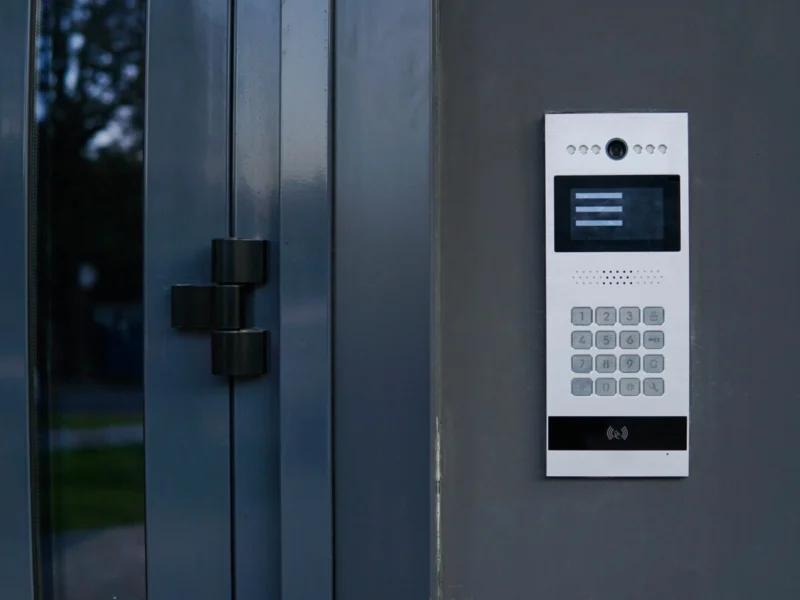
Sinead Campbell from Flat Living Insurance looks at how access control systems work and why they should be considered, if your block could benefit from a security upgrade.
Security is a priority for leaseholders. Sharing a space with multiple residents is one thing, but the building being open to the public is quite another. Access control is essential for safety, property protection and peaceful enjoyment.
Access control systems utilise technology to ensure only residents, contractors and other authorised persons can enter the building. They also create a record of who has entered and exited, providing another layer of security.
Technology associated with keypads and fobs linked to mobile apps and biometrics, is evolving.
What is an Access Control System?
An access control system allows you to manage who can enter the building, or specific parts of it. Instead of relying on traditional keys, residents and other permitted persons can use digital methods such as fobs, cards, or mobile apps to open doors. Some systems include scanners for key cards or tags for secure entry. Others use maglocks (electro – magnetic locks), to keep doors locked until access is granted.
Door entry systems for flats can be as simple or as advanced as budget allows. A basic option is a simple keypad with a code. A more advanced setup could include video cameras, electronic locks, and real-time monitoring.
Why are Door Entry Systems Great for Flats?
Flats often have communal areas and multiple residents. This makes them more difficult to manage than single homes. A traditional lock and key can be lost, stolen or copied. Replacing locks every time a resident moves out is costly and time-consuming.
Door entry systems reduce these risks. If a key fob or card is lost, it can be de-activated instantly. There is no need to change the lock, this helps protect everyone in the building and reduces the chance of unwanted access.
Access systems also control who can go where within the block – storage and machinery spaces, facilities such as gyms, swimming pools and car parks, and communal spaces of all kinds can be controlled easily and efficiently.
The Benefits for Residents and Property Managers
The main benefit of a modern access and control system is security. Residents feel safer knowing that only approved people can get into the building. This is especially helpful for larger blocks with multiple points of entry.
Advanced systems can track who enters and leaves. Some even offer time-limited access for cleaners, delivery drivers or contractors. Property managers can monitor activity and respond quickly if something goes wrong.
Some systems also include video intercoms – allowing residents to see and speak to visitors before letting them in. This adds another layer of safety, especially useful for vulnerable residents.
Lower Insurance and Fewer Claims
Installing proper access control can reduce a building’s risk profile, which may lead to lower insurance premiums. Insurance providers often see access control as a sign that the building is managed well.
With fewer break-ins or unauthorised entries, there may also be fewer claims made on the policy. This can result in savings in the long run, for the building owner and management company. Less crime and vandalism also mean less time and money spent on repairs, replacements or legal issues.
For property managers, good access control is also about responsibility. If someone gains entry and causes harm or damage, questions may be asked about how they got in. By installing modern door entry systems, property managers show they are taking reasonable steps to keep residents safe. Logs and reports from these systems can also be used as evidence in the event of a dispute or legal issue.
Choosing the Right System
Each block of flats is different, so access control systems come in many shapes and sizes. For smaller buildings, a simple keypad or fob system might be enough. For larger or high-end developments, scanners, maglocks, or cloud-based systems can provide extra features.
Some systems allow remote control, meaning access can be granted or denied from a mobile device. This is helpful in emergencies or when managing multiple buildings. Systems can also be expanded as needed – for example, access could be added to car parks, bin stores or bike sheds later on.
When choosing a system, it is important to work with a reputable supplier. Look for systems that meet British standards and are suitable for residential use. You will need to consider:
- How many people need access
- The number of entry points
- Whether video or audio is required
- How access is granted (fob, card, app, etc.)
- Budget and ongoing costs
It is also worth asking residents for feedback, after all they are the ones who will use the system every day.
In Summary
Door entry systems for flats are an excellent way to increase security, manage risk, and reduce hassle. With options ranging from simple code panels to more advanced options, there is a solution for every block.
Modern access and control technology helps protect both people and property. It shows residents that their safety matters and supports property managers in meeting their legal and insurance duties.


 Insurance Considerations for Leaseholders in Listed Blocks of Flats